3 hr 30 min
Tokyo Tuna Auction & Market Discovery Tour
- Entry ticket
- Mobile voucher
- Valid same day
- Free cancellation
Toyosu Market Tuna Auction Tour — Pre-Dawn Viewing Deck Access
Watch the world's fastest seafood exchange unfold, where bluefin fortunes are decided in minutes
Compare fares, pick the fit — all bookings are mobile-voucher and eligible for free cancellation where shown.
3 hr 30 min
3 hr 30 min
3 hr 30 min
| Experience | Duration | Rating | Guide | Small group | Audio guide | Free cancel. | Price | |
|---|---|---|---|---|---|---|---|---|
|
Standard Entry
Most popular
Tokyo Tuna Auction & Market Discovery Tour
|
3 hr 30 min | ★ 4.9 | ✓ | ✓ | ✓ | ✓ | €98 | Book → |
|
Standard Entry
Toyosu Tuna Auction Experience with Optional Sushi Breakfast
|
3 hr 30 min | ★ 4.6 | ✓ | ✓ | — | ✓ | €97 | Book → |
|
Standard Entry
Early Morning Toyosu Tuna Auction & Tsukiji Market Tour
|
3 hr 30 min | ★ 4.9 | ✓ | ✓ | ✓ | ✓ | €102 | Book → |
Hand-picked experiences loved by thousands of travelers
3 hours
Free Cancellation
Experience Tokyo's massive wholesale seafood hub before dawn, witness the legendary tuna auction, and savor a traditional Japanese breakfast.
3.5 hours
Free Cancellation
Experience Tokyo's legendary seafood markets from wholesale auction floor to bustling street stalls
3 hours
Free Cancellation
Exclusive group experience combining the famous tuna auction with culinary exploration at two iconic markets
2.5 hours
Free Cancellation
Discover Tokyo's premier seafood hub, savor authentic Japanese dishes, and unwind in a bayfront onsen.
6.5 hours
Free Cancellation
Explore one of the globe's premier seafood markets, then craft authentic sushi in a private Shinjuku kitchen
7 hours
Free Cancellation
Explore the actual market floor, craft five sushi styles, and participate in a traditional tea ceremony
3 hours
Free Cancellation
Explore restricted market zones with a professional sushi chef, then savor the omakase they prepare for you
You arrive at Shijo-mae Station on the Yurikamome Line before 5:15 AM, when the plaza outside Toyosu Market is still dark and the only lights come from delivery bays and the illuminated walkway to the visitor entrance.
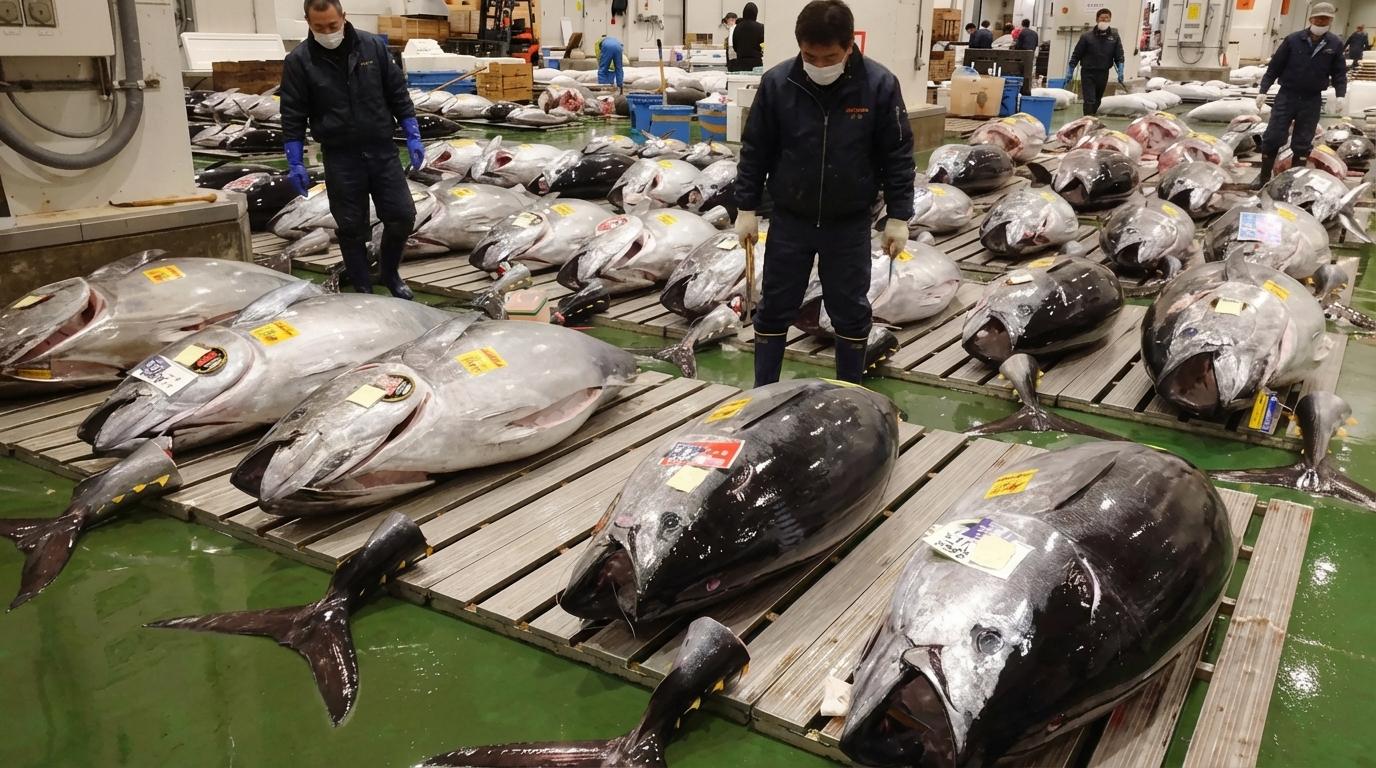
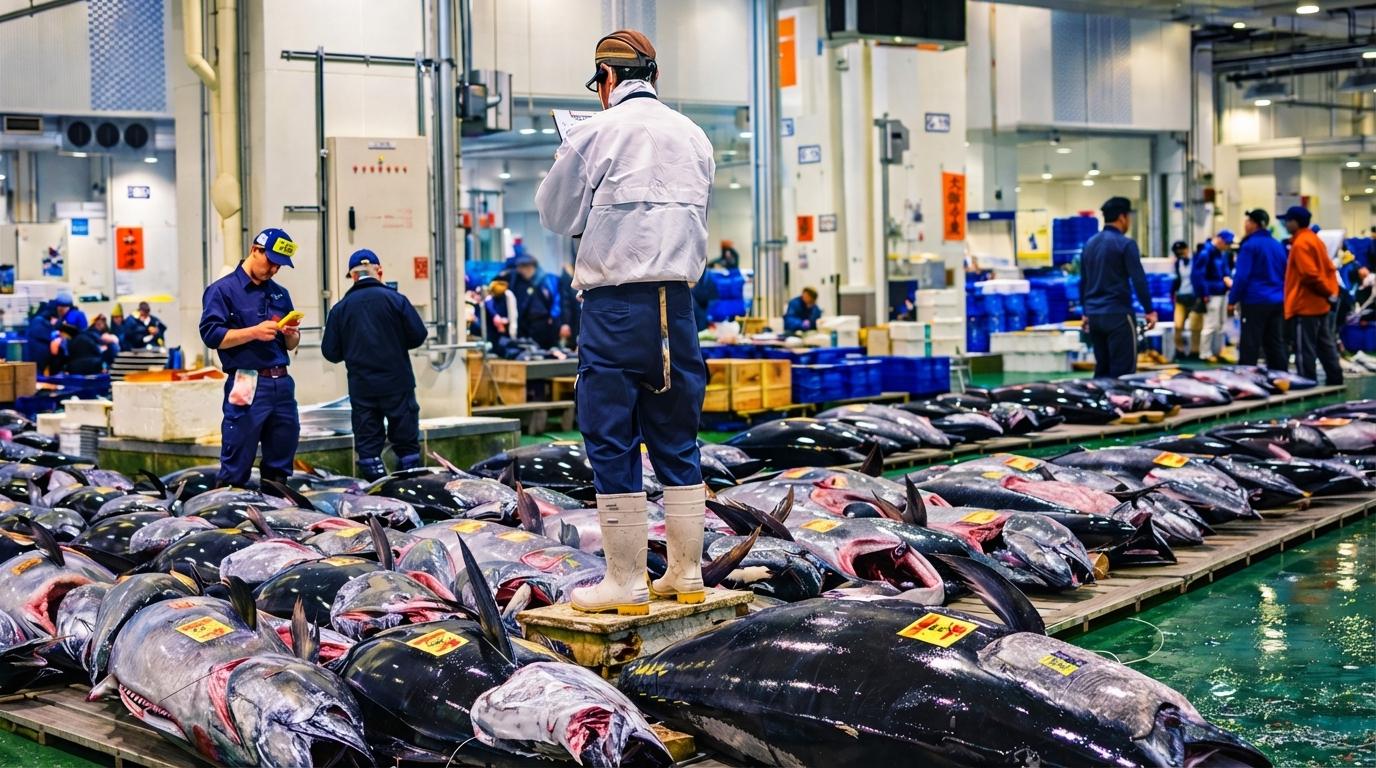
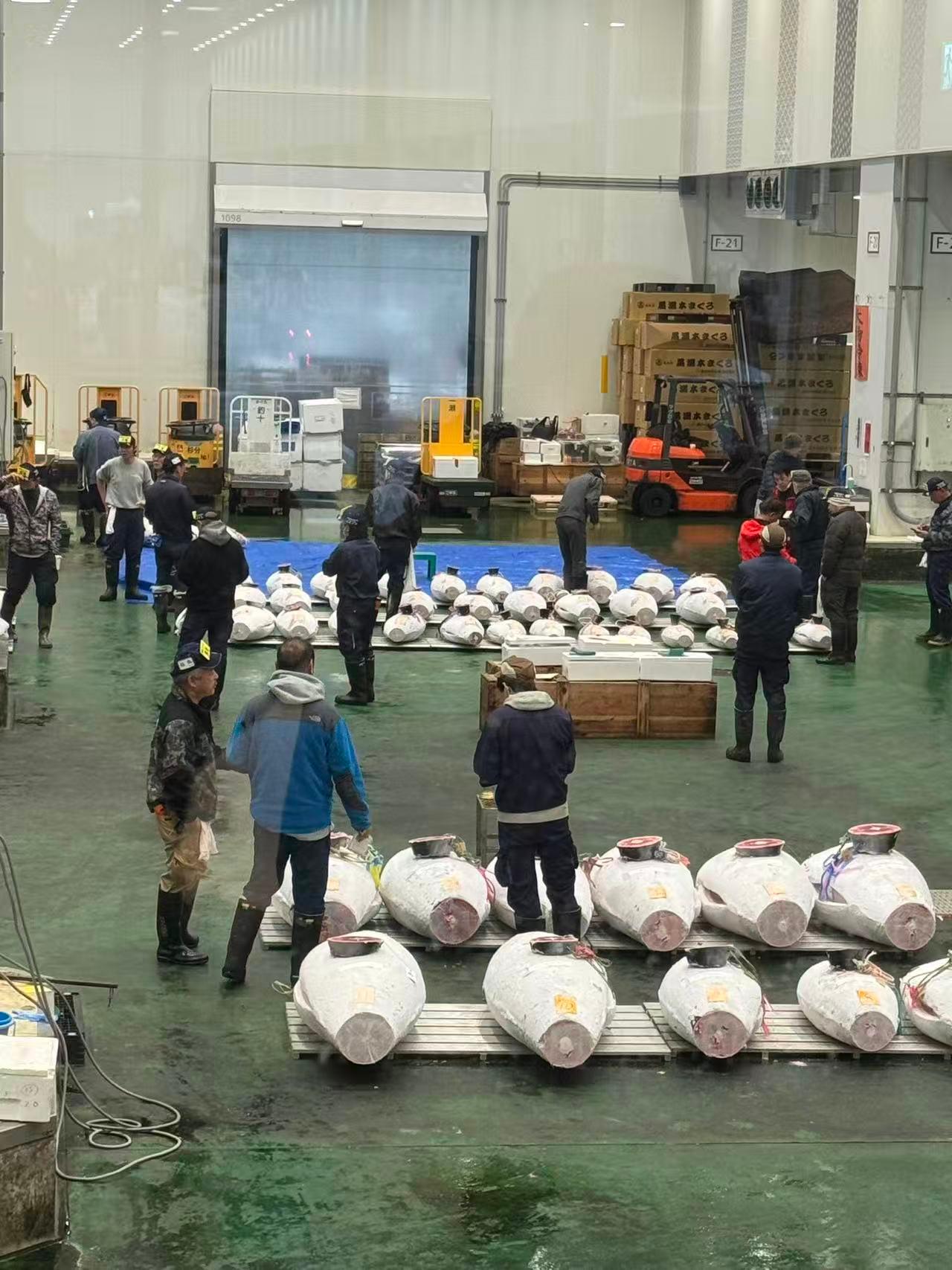
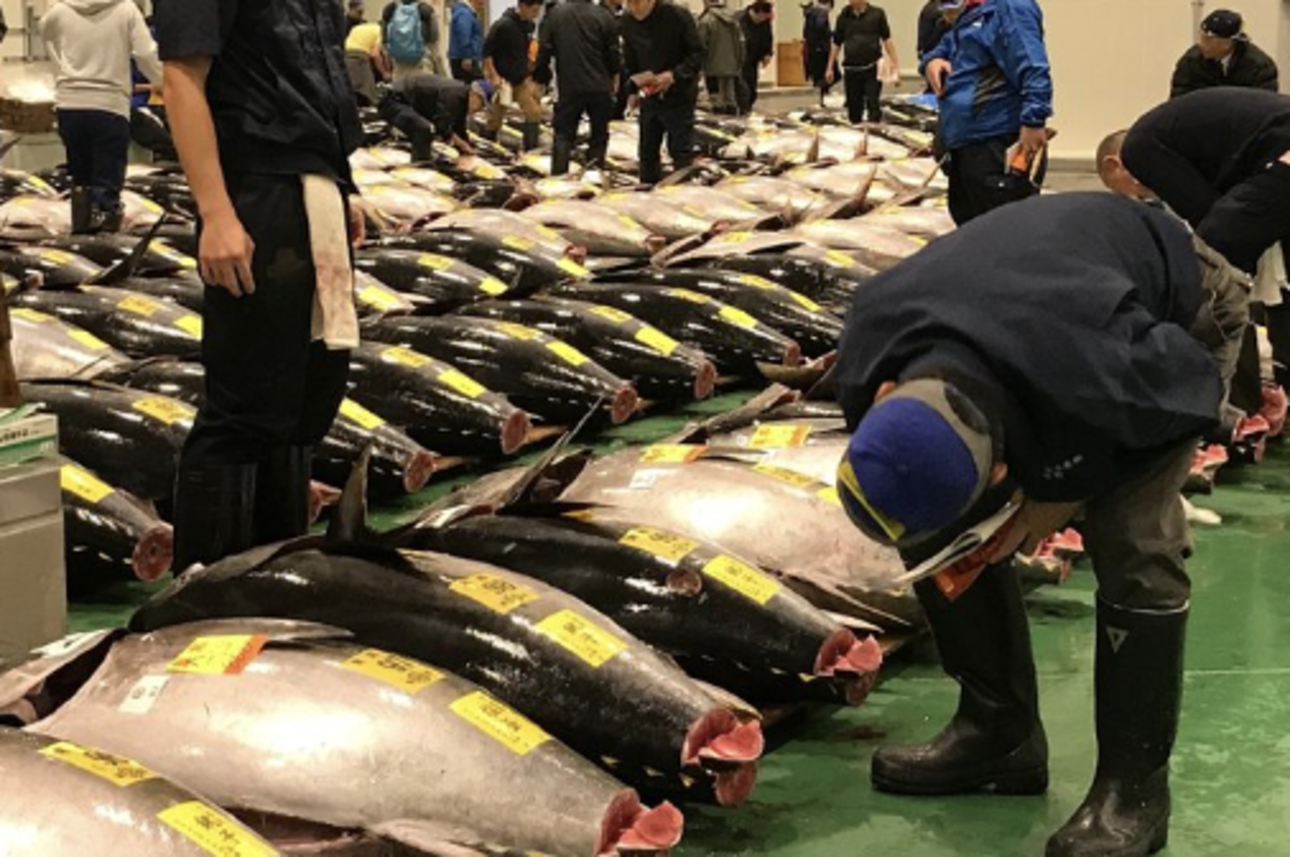
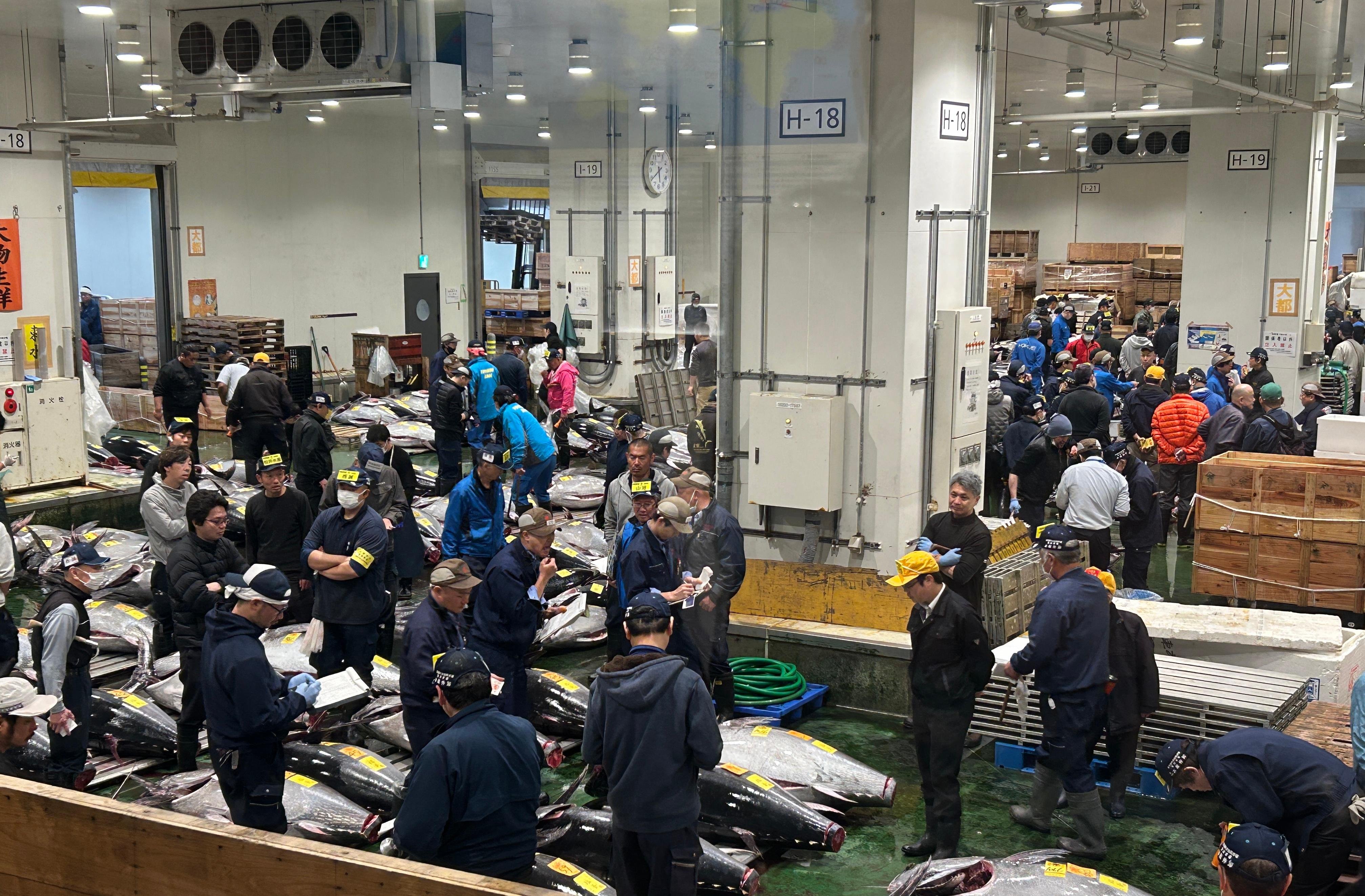
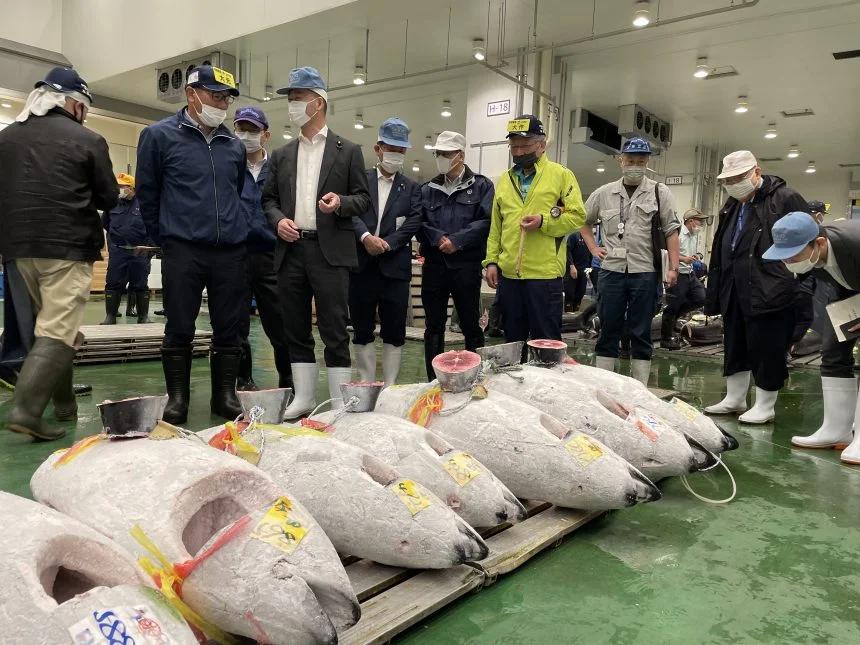
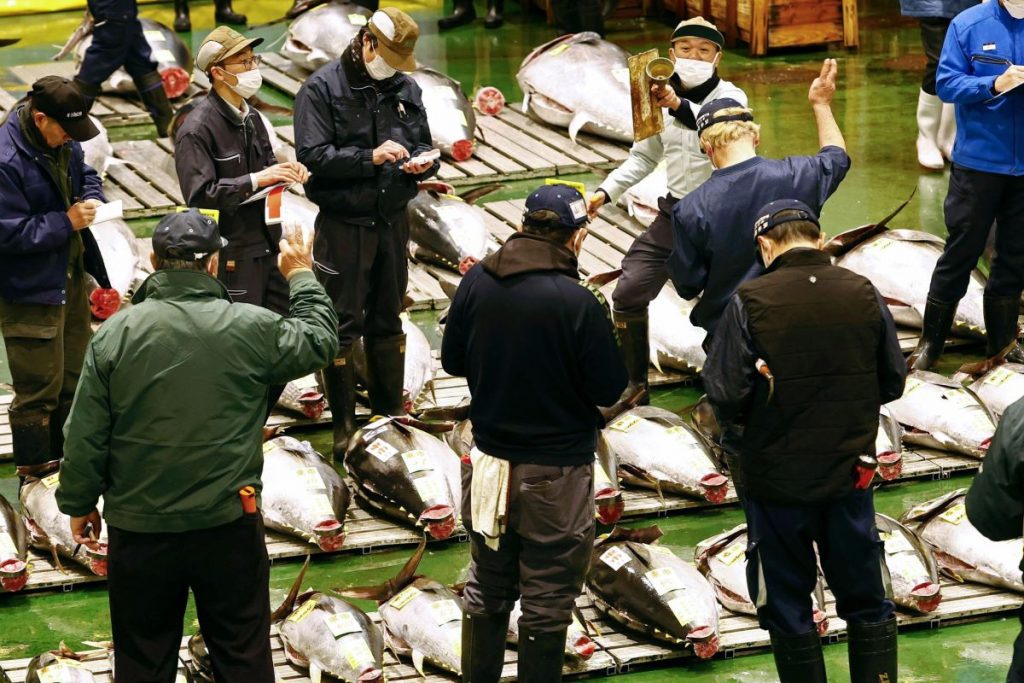
You pass through the automatic doors of Building 7, collect your visitor lanyard from the reception counter, and ride the escalator to the second-floor observation corridor. At 5:30 AM the auction floor below you ignites with activity—auctioneers in orange vests position themselves beside rows of frozen tuna laid out on pallets, each fish tagged with origin, weight, and inspection grade. You watch as buyers in rubber boots crouch beside a 180-kilogram bluefin from Oma, examining the tail's ruby cross-section with pocket flashlights before the turret auction begins.
The auctioneer's chant rises in pitch and tempo, a staccato cadence punctuated by hand signals from bidders who stand in a loose semicircle. The hammer drops in 40 seconds. A buyer immediately attaches a wooden tag to the fish's head, signaling ownership, and a forklift operator wheels the lot toward the cutting area. You move along the viewing deck as the next round begins—12 bigeye tuna from Nagasaki, smaller and darker, sold in rapid succession. By 6:10 AM the floor begins to quiet. Workers hose down the auction ring, and the final bluefin of the morning is rolled into the cold storage tunnel that connects to the intermediate wholesale stalls.
All the details about your upcoming adventure in one place
The toyosu market tuna auction tour offers exclusive early-morning access to witness Tokyo's world-famous wholesale seafood trading floor in action. Visitors observe massive bluefin tuna being auctioned at lightning speed using traditional hand signals, followed by exploration of the intermediate wholesale area where vendors prepare fresh catch for restaurants across the city. Toyosu market tuna auction tour tickets grant entry to observation decks overlooking the auction floor, providing an authentic glimpse into Japan's seafood distribution system that supplies sushi restaurants and fish markets throughout the metropolitan area.
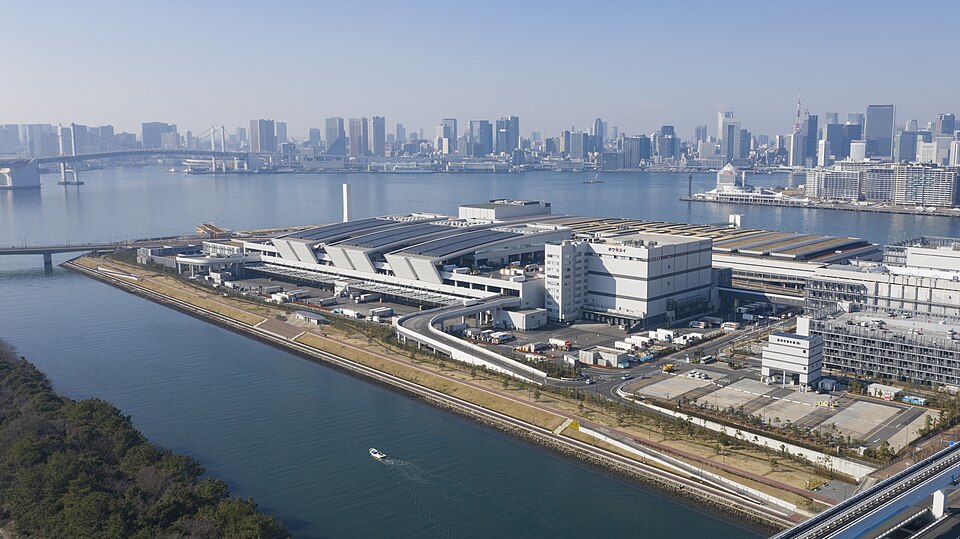
When Tsukiji's wholesale operations relocated in October 2018, the tuna auction moved to a purpose-built facility in Toyosu designed to handle 1,600 tonnes of seafood daily across three refrigerated buildings.
The new market sits on reclaimed land in Koto Ward, connected to central Tokyo by the Yurikamome Line and a network of service tunnels that keep delivery trucks separate from visitor corridors. The auction floor in Building 7 operates under ceiling-mounted cameras and a strict biosecurity protocol that replaced Tsukiji's open-air chaos with climate-controlled transparency. Visitors now watch from an elevated glass-fronted observation deck that holds 120 people per session, a compromise between public access and the operational demands of auctioneers who sell 400 to 600 fresh and frozen tuna between 5:30 and 6:15 AM six mornings a week.
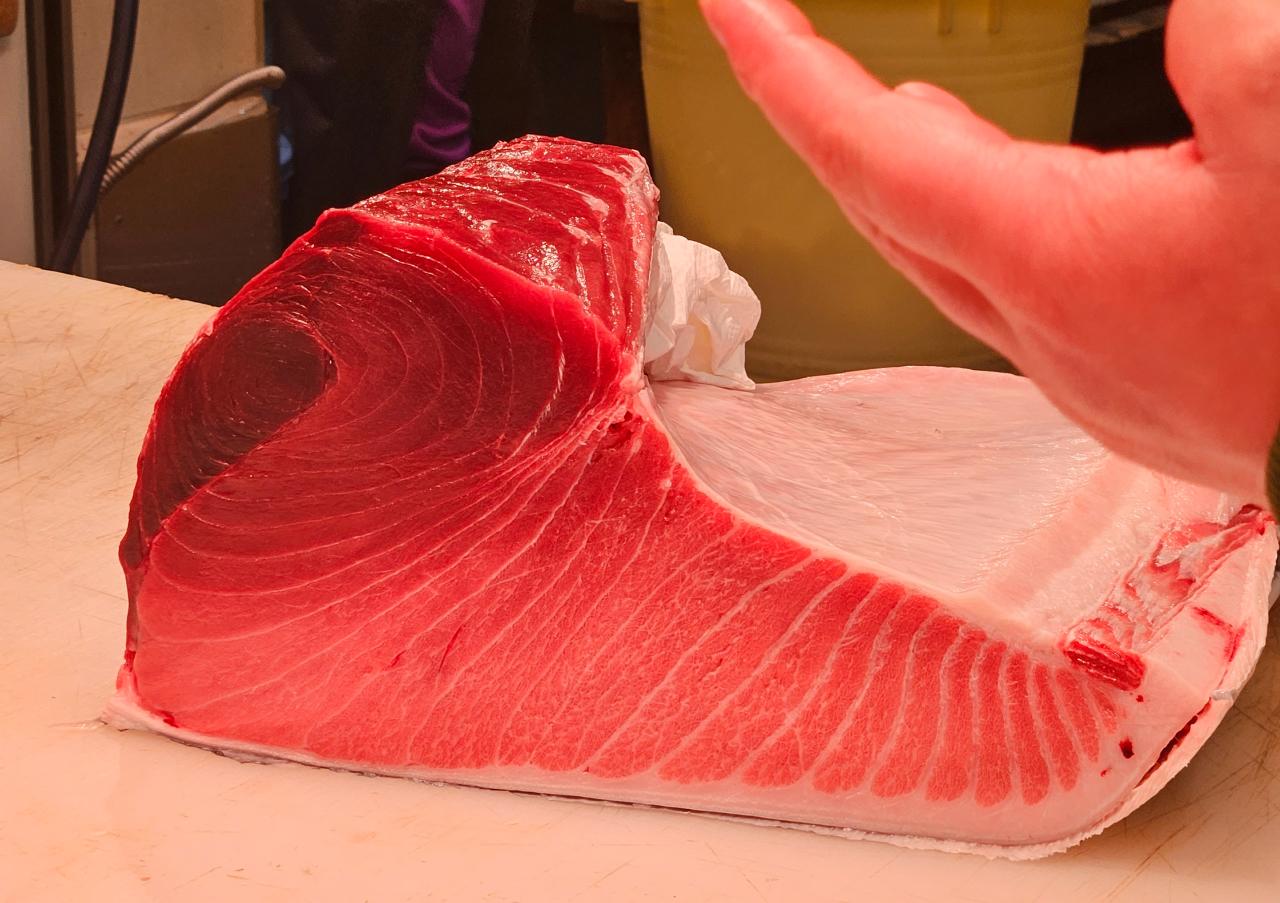
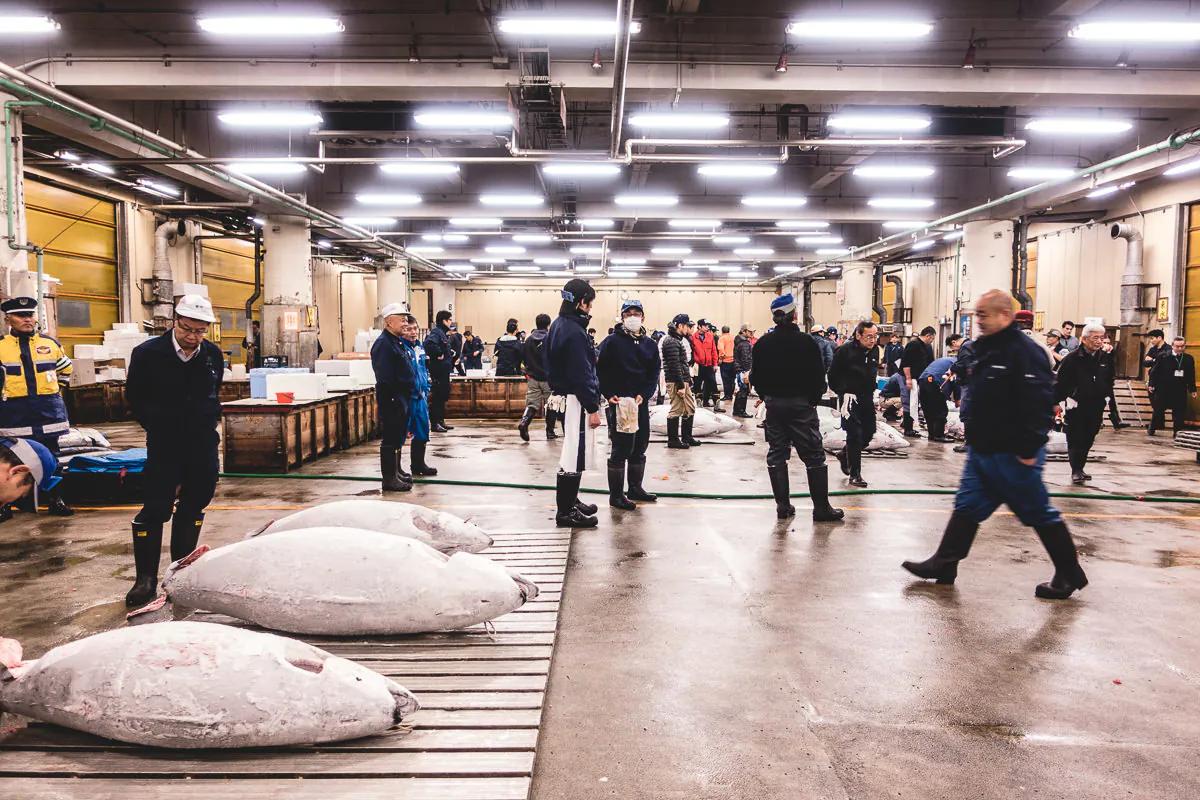
The Tokyo toyosu tuna auction tour draws its intensity from the speed of the turret auction system, a uniquely Japanese format in which bidders stand in assigned positions around the auctioneer and signal bids with hand gestures and coded shouts. Each lot—a single bluefin, bigeye, or yellowfin tuna—receives 30 to 90 seconds of scrutiny before the hammer drops. Licensed intermediate wholesalers inspect the tail cross-section and flesh color under halogen work lights, judging fat content and market grade with a flick of a steel probe. Record-breaking bluefin tuna from Oma regularly clear 10 million yen in the New Year's ceremonial first auction, but daily lots typically settle between 3,000 and 15,000 yen per kilogram depending on origin, season, and fat marbling.
The lottery system for toyosu market tuna auction tour tickets opens online each month for the following month's sessions, with applicants selecting a preferred date and receiving confirmation 10 days before the visit. The lower observation deck, which offers unobstructed views directly above the auction floor, admits only lottery winners; the upper public deck opens without reservation but fills quickly on weekends. Both decks enforce a no-photography rule during active bidding to prevent distractions, lifting restrictions once the session concludes and buyers begin tagging their purchases for transport to the intermediate wholesale stalls in the adjacent building. The entire viewing experience lasts 25 to 40 minutes, depending on the morning's volume, and ends when the final tuna is wheeled off the floor and the auctioneers reset for the next category—swordfish, mahi-mahi, or deep-sea snapper bound for Tokyo's 35,000 restaurants.

Each lot receives 30 to 90 seconds of scrutiny before the hammer drops.
Wear comfortable shoes as you will be navigating large, tiled warehouse facilities. The special auction observation deck is kept at very cool, freezer-like temperatures, so bring layers even in warmer months.
There are no locker facilities for large luggage at the market. Security personnel may monitor bags, and you must present a valid photo ID matching your lottery registration to access the special tour deck.
Photography is generally permitted in designated visitor areas. Flash photography is strictly prohibited inside the tuna auction observation deck to avoid distracting the professional buyers.
The market is family-friendly, though the early morning toyosu market tuna auction tour may be challenging for small children. Keep a close watch on them, as the warehouse floor is a busy, active industrial zone.
The market is modern and wheelchair-accessible via elevators and ramps. Dedicated viewing windows for the toyosu market tuna auction tour are accessible to all visitors on the second floor.
There are many on-site sushi restaurants serving fresh breakfast. Consumption of food and drink is prohibited on the pedestrian walkways and near the viewing windows.
Opening Hours
05:00–17:00 (Mon–Sat)
Address
6 Toyosu, Koto-ku, Tokyo 135-0061, Japan
Entry Fee
0 JPY (Free entry; advance lottery required for the special lower observation deck.)
Best Arrival
05:00–05:30 — Auctions begin at 05:30; early arrival ensures access to viewing areas before they reach capacity.
Phone
+81-3-3520-8205
Official Site
https://www.shijou.metro.tokyo.lg.jp/toyosu/
Public transport · 5 min walking from station · From 200 JPY
Take the Yurikamome Line to Shijo-mae Station. The station provides a direct pedestrian walkway to the market buildings.
The general market entry is free of charge with no booking required. For the special tuna auction tour deck, if you win a lottery spot, follow the specific instructions in your confirmation email regarding no-shows.
Recommended time
2-3 hours
To secure a position for the toyosu market tuna auction tour, visitors should align their arrival with the best arrival window: 05:00–05:30. Since auctions begin at 05:30, arriving early ensures access to the observation deck before it reaches capacity, which is essential for those who have secured advance lottery entry for these Tokyo seafood market tours. While crowds fluctuate, the morning viewing session remains the busiest period, requiring travelers to plan their transit accordingly to obtain their toyosu market tuna auction tour tickets or lottery spots. After the main event, the remaining time is typically spent exploring the wholesale area, though those seeking toyosu market tuna auction tour tours often find the experience concludes quickly once the active bidding ends.
Crowd levels through the day
Weather · crowds · average price — dots go green to amber to red as each metric rises.
September offers comfortable temperatures for early morning travel. Expect crisp air and excellent visibility for early arrivals.
The market is particularly atmospheric during the cold winter months. January hosts the symbolic first tuna auction of the year.
Crowds are manageable, providing a stable experience for a toyosu market tuna auction tour. Fresh produce variety peaks.
Early humidity is avoided by arriving during the 05:00 window. It is the best time for a cooling indoor market exploration.
The actual bidding for the toyosu market tuna auction tour is fast and occurs primarily between 05:30 and 06:30.
Fisheries Wholesale Market Building, 3F
Standard meeting point for lottery winners
Get directionsThe toyosu market tuna auction tour represents the culmination of a century-long evolution in Tokyo's seafood distribution infrastructure. The original wholesale market operated at Tsukiji from 1935, inheriting traditions from the Nihonbashi fish market established during the Edo period in 1603. By the early 2000s, Tsukiji's aging wooden structures, inadequate refrigeration, and narrow lanes threatened both hygiene standards and operational efficiency. The Tokyo Metropolitan Government announced relocation plans in 2001, selecting a former gas plant site in Koto Ward's Toyosu district. Construction delays and soil contamination controversies postponed the move repeatedly. Environmental assessments revealed benzene and arsenic levels exceeding safety thresholds, triggering remediation work that extended from 2008 through 2016. Governor Yuriko Koike temporarily halted the transfer in 2016, ordering additional groundwater testing and ventilation upgrades. The market finally relocated on October 11, 2018, ending 83 years of operations at Tsukiji. Toyosu's three-building complex introduced temperature-controlled auction floors, covered loading bays, and a dedicated observation deck for international visitors seeking authentic tuna auction tours. The new facility preserved the turret truck auctions and hand-signal bidding systems that defined Tsukiji's legendary seafood trade. Licensed wholesalers still arrive before dawn to inspect bluefin tuna laid in rows across refrigerated concrete, their flesh quality assessed under halogen lamps. The observation gallery, accessed via advance lottery, allows 120 visitors per session to witness auctioneers chanting rapid-fire bids while buyers mark purchase slips. This modernized infrastructure sustains Tokyo's role as the world's largest fish market, handling over 480 tons daily while making the storied auction ritual accessible through structured toyosu market tuna auction tour tickets.
The Nihonbashi fish market opens in Edo, establishing Tokyo's central role in seafood distribution.
The Great Kanto Earthquake destroys Nihonbashi, prompting plans to relocate wholesale operations.
Tsukiji Central Wholesale Market begins operations, consolidating Tokyo's seafood and produce trade.
Tokyo Metropolitan Government announces Tsukiji relocation to address infrastructure deficiencies.
Soil remediation work addresses benzene and arsenic contamination at the former gas plant site in Toyosu.
Toyosu Market opens, transferring all wholesale operations and introducing climate-controlled auction halls.
The observation deck lottery system launches, formalizing public access to tuna auctions for international visitors.
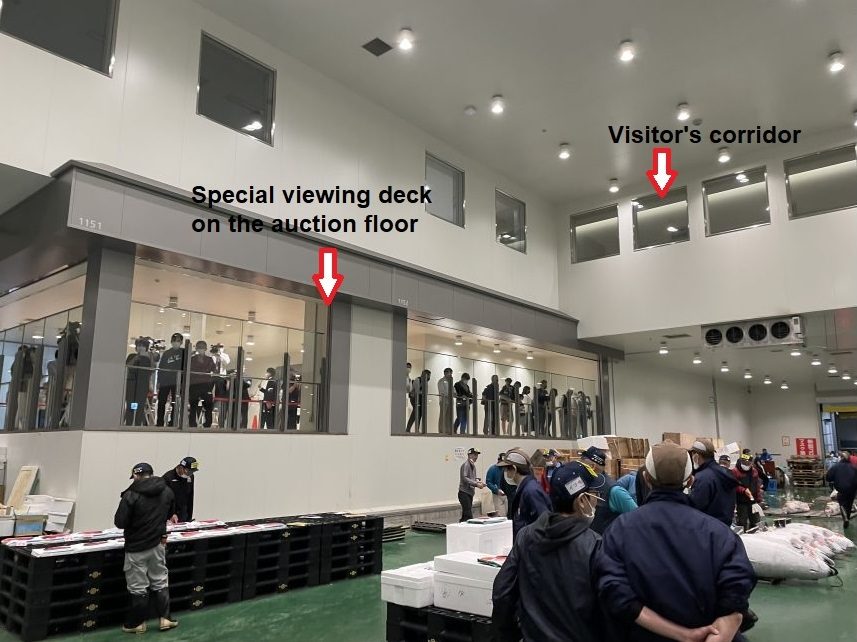
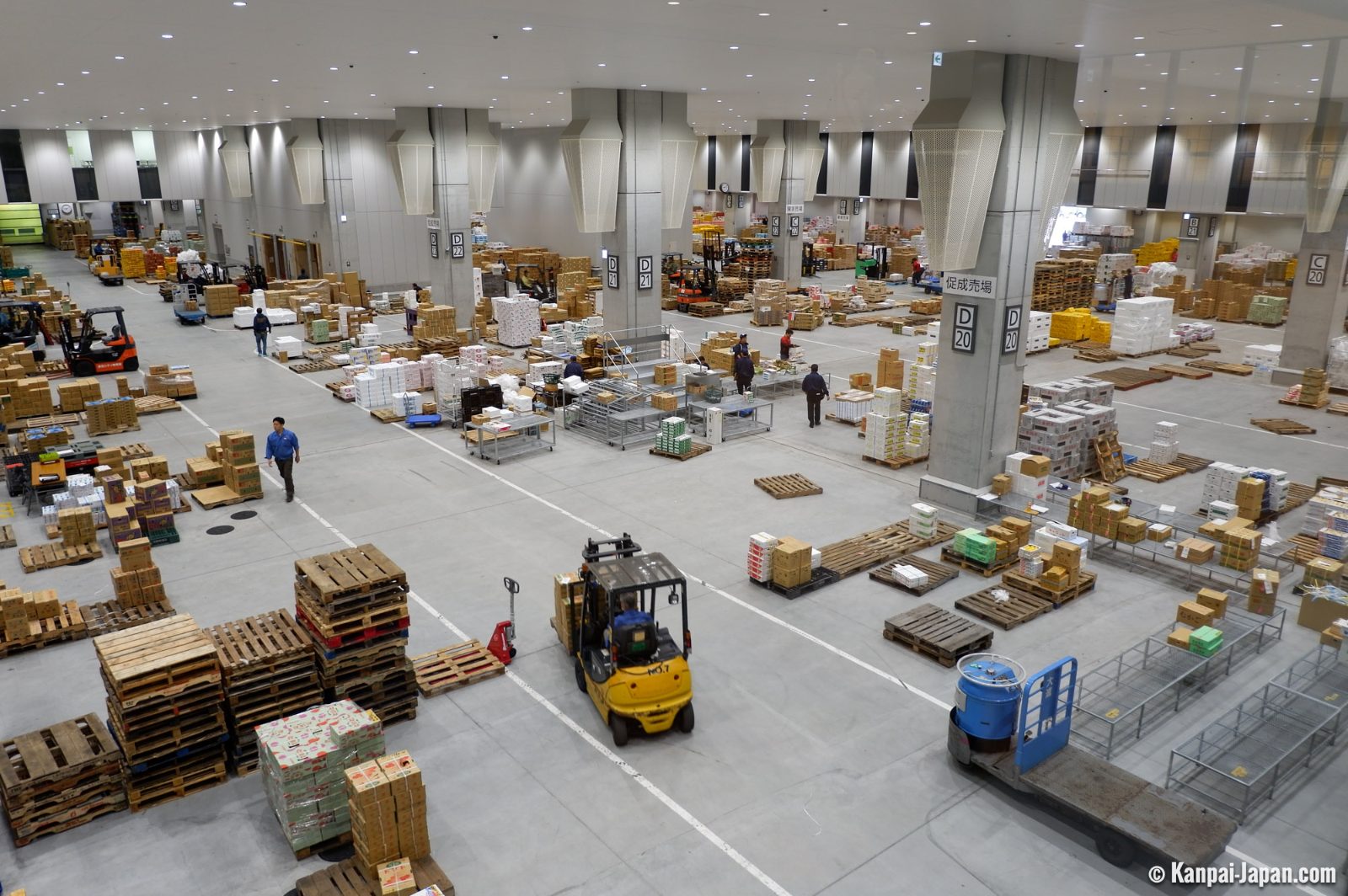
Located at the ground level, this area provides the closest vantage point to the frozen seafood sales floor. Advance lottery selection is required to access this specific zone for a toyosu market tuna auction tour.
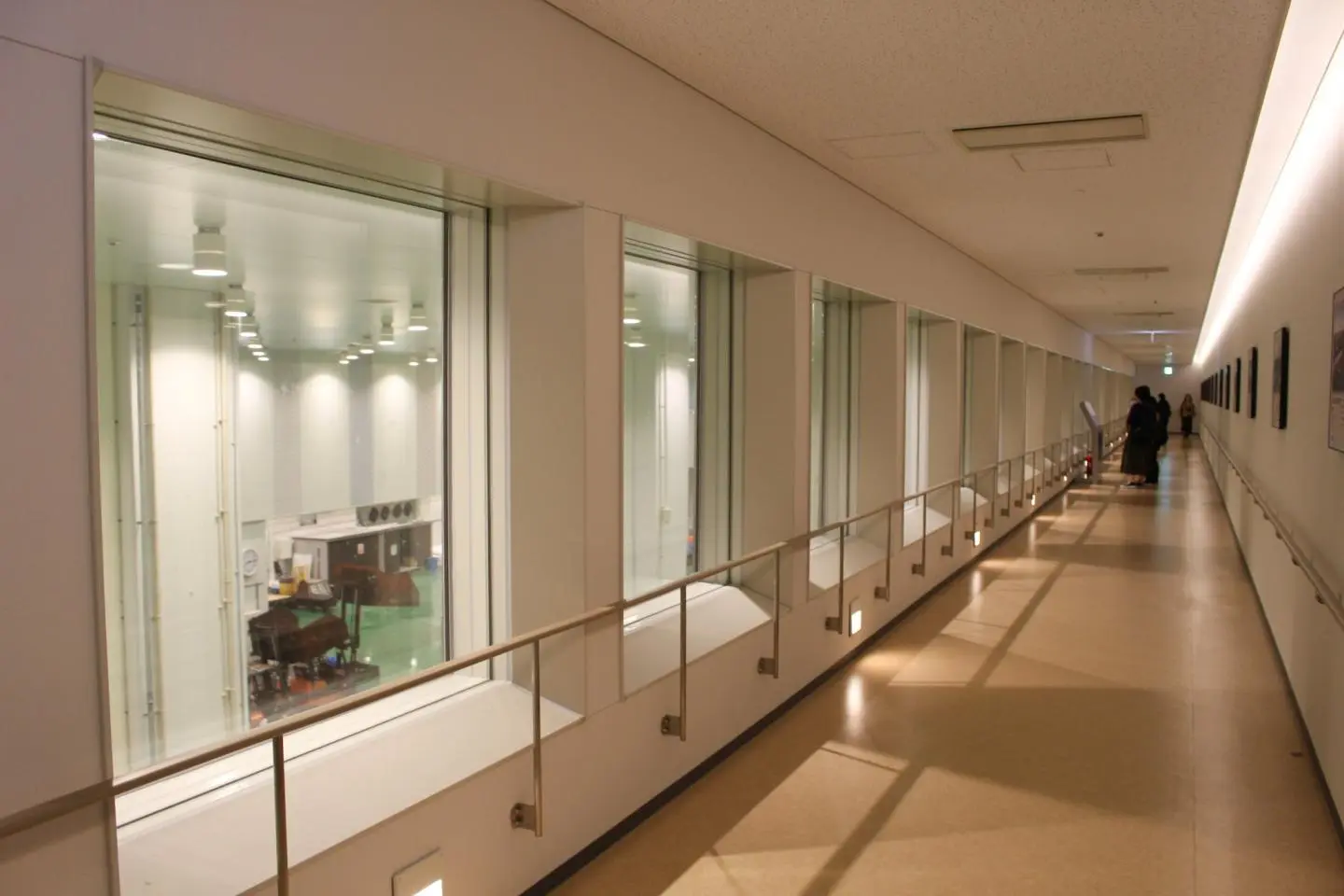
This glass-enclosed walkway offers a wide-angle perspective of the entire facility from above. It is the ideal place to capture the scale of the wholesale seafood complex without needing toyosu market tuna auction tour tickets.
Positioned along the main visitor path, these windows look down directly onto the vibrant trading floor. This is a reliable spot for those taking a Tokyo fish market tour to frame the action through the glass.
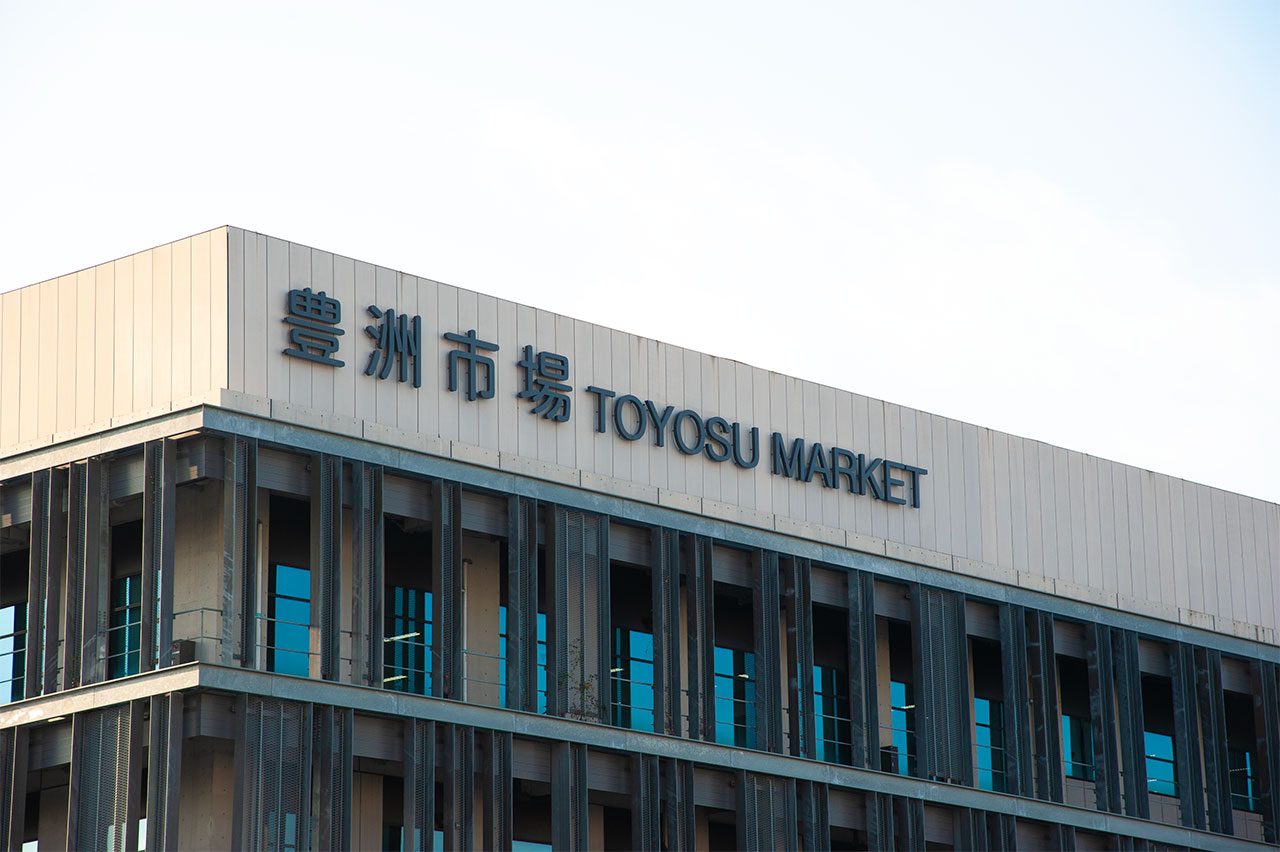
The exterior of the building features modern architectural lines and signage perfect for establishing shots. Visitors often photograph this area to document their arrival at the landmark before joining their toyosu market tuna auction tour tours.
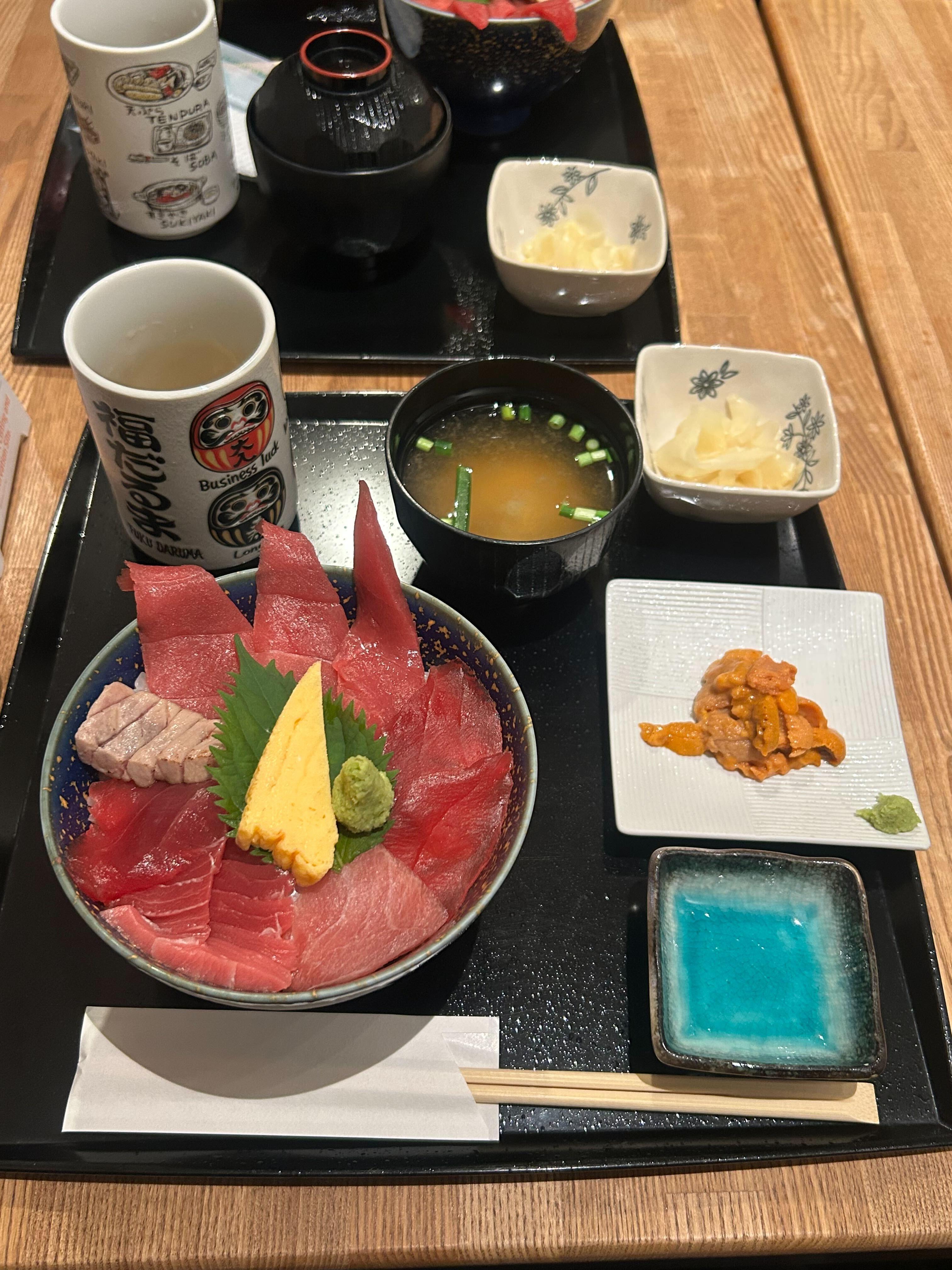
Visitors finishing a toyosu market tuna auction tour will find several renowned sushi establishments located directly within the market's fisheries wholesale buildings. These venues specialize in fresh seafood bowls, making them ideal for those seeking an authentic breakfast after viewing the tuna auctions.
Known for high-quality omakase sets, this popular spot often has a queue before dawn. It is an excellent choice for a formal breakfast when securing toyosu market tuna auction tour tickets.
This iconic venue offers some of the freshest nigiri in Tokyo, serving early-bird patrons since the market relocated. It remains a top destination for toyosu market tuna auction tour tours visitors.
Specializing in shellfish and seasonal offerings, this restaurant provides a slightly more accessible pace than its neighbors. It is a reliable option for those completing their toyosu market tuna auction tour tour.
Real experiences from real travelers
We joined the toyosu market tuna auction tour and it delivered on every expectation. The scale of the operation is remarkable—hundreds of frozen tuna lined up under cold fluorescent light while auctioneers work through lots with rapid hand signals. Our guide explained the grading system and pointed out a 200kg bluefin that eventually sold for over ¥800,000. You must book weeks ahead and the 4:30am start is non-negotiable, but watching wholesalers inspect each fish with pocket flashlights before bidding is a window into a tradition most visitors never see.
Arrived at Toyosu before dawn and the energy on the auction floor was immediate. The tuna auction operates with precision—buyers bid using subtle gestures while staff mark prices on whiteboards. Our tour allowed observation from a designated viewing area without disrupting the professionals at work. The sheer variety of seafood beyond tuna, from octopus to sea urchin, reminded me this is a working market first and a tourist attraction second. Bring layers—the refrigerated sections hover just above freezing.
The toyosu market tuna auction tour gave me a deeper understanding of Tokyo's fish supply chain than any restaurant visit could. We watched buyers from sushi restaurants and wholesalers compete for premium hon-maguro, with the auctioneer's chant echoing across the concrete floor. After the auction we explored the outer market's small restaurants—grilled scallops and tamago were exceptional. The entire facility is spotless and efficiently organized. Tours fill up fast so reserve as soon as your travel dates are confirmed.
Waking up at 3:45am tested my commitment but standing in the viewing gallery as the tuna auction began made it worthwhile. The speed of transactions is astonishing—each lot moves in under a minute. Our guide explained how tail cuts and body shape indicate fat content and quality grade. Toyosu replaced Tsukiji in 2018 and the modern infrastructure shows: wide aisles, climate control, and clear sightlines for visitors. The intermediate wholesale area afterward had vendors breaking down whole fish with techniques passed through generations.
The auction itself is impressive in scale and the logistics of moving thousands of fish through the market each morning is a feat of coordination. However, viewing is restricted to an elevated platform with glass barriers, so you observe rather than immerse. The toyosu market tuna auction tour is well-organized and our guide was knowledgeable about species and pricing, but it lacks the chaotic intimacy that Tsukiji apparently had. Still a valuable experience if you're interested in Japanese food culture and don't mind the early departure.
I've visited fish markets in Mumbai and Chennai but nothing operates quite like Toyosu. The tuna auction moves with choreographed efficiency—frozen bluefin arranged in rows, buyers crouching to inspect flesh color and marbling, then the auctioneer's rapid-fire call and response. We were part of a small group limited to 120 visitors per day, which kept the experience intimate. The market's design allows natural workflow from unloading docks through auction floors to the packing areas. Finish with breakfast at one of the sushi counters where chefs source ingredients from stalls you just walked past.
Booked our spot on the toyosu market tuna auction tour two months out and it was the highlight of our Tokyo week. The auction begins at 5:30am sharp with tuna lots ranging from small yellowfin to giant bluefin over 300kg. Buyers use hand signals and subtle nods—blink and you'll miss a ¥1 million transaction. The wholesale building is vast and refrigerated, with sections for different species. Our guide pointed out seasonal catches and explained how auction prices fluctuate based on fat content and origin. Practical tip: the nearest restroom is a five-minute walk so plan accordingly.
This is not a performance—it's a real wholesale auction that happens to allow limited observation. The buyers are professionals assessing product they'll serve that same day, and the pace reflects that urgency. We watched the tuna auction from a mezzanine area with clear views of the floor and heard the auctioneer's calls amplified through speakers. The quality standards are rigorous; even fish that don't meet top grades are exceptional by most markets' measures. Toyosu operates six days a week except Sundays and market holidays. Check the calendar before booking.
Dress warmer than you think—the auction floor is kept cold for product preservation and standing still for 45 minutes in that environment requires a jacket even in late spring. The toyosu market tuna auction tour begins with a brief orientation about the market's history and layout before entering the observation deck. We saw dozens of frozen tuna hammered with small mallets to test density, then auctioned in quick succession. The winning buyers attach tags and move product to cutting stations within minutes. It's a functional, no-frills experience that prioritizes the market's operations over visitor comfort, which is exactly what makes it compelling.
The sheer logistics behind Tokyo's seafood distribution became clear during our morning at Toyosu. The tuna auction is the centerpiece but the surrounding activity—forklifts moving pallets of octopus, vendors filleting salmon, buyers negotiating over crates of shellfish—is equally absorbing. Our tour included access to the intermediate wholesale area where restaurateurs purchase directly from stall operators. The facility handles over 1,600 tons of seafood daily and every step is visible. Reserve through the official metropolitan market website; third-party booking sites charge unnecessary premiums.
Everything you need to know for your journey
Yes, visiting the market is 0 JPY. For the special tour deck, the fee is 0 JPY but requires an advance lottery win.
Only the special observation deck requires a reservation. You can visit the free visitor walkway without tickets.
You should arrive by 05:00–05:30. The toyosu market tuna auction tour typically starts at 05:30.
Yes, children are welcome on the toyosu market tuna auction tour. Keep them close as the facility is an active workspace.
Yes, photos are allowed on the toyosu market tuna auction tour. However, please refrain from using flash inside the deck.
The walkway is always open to the public; the lower deck provides a close-up, temperature-controlled, reservation-only view for the tour.
Yes, there are approximately 38 restaurants available. Most open for breakfast after the toyosu market tuna auction tour concludes.
Access the market via the Yurikamome Line to Shijo-mae Station, which is directly linked to the buildings.
The market is closed on Sundays, public holidays, and some Wednesdays, affecting the schedule of the toyosu market tuna auction tour.
A modern complex with hot spring facilities and street food markets.
A popular choice for visitors seeking proximity to the market for early morning starts.
Join thousands of happy travelers who have discovered this incredible experience
Book Your Experience Now